

Apple is a brand that has experienced uncertainty, intense competition and moments when its future seemed far from guaranteed. Today, it stands among the world's most valuable companies, recognised for its premium products, distinctive design and ability to influence the technology industry. But as the company enters a new leadership era under John Ternus, an important question arises: can Apple once again deliver the kind of innovation that makes people excited about technology?
For decades, Apple's story has been closely associated with Steve Jobs, a visionary leader who believed that technology should be powerful, intuitive and beautifully designed. His approach helped transform computers, music players and smartphones into products that changed how people live and work. Now, the challenge for Ternus is not simply to protect that legacy, but to build on it.
Steve Jobs: The Vision That Changed Technology
Steve Jobs was more than a co-founder of Apple. He was a leader who understood that technological progress was not just about making devices faster or adding more features. It was about rethinking how people interact with technology.
The Macintosh helped popularise the graphical user interface. The iPod transformed digital music consumption, while the iPhone redefined the smartphone experience by combining communication, internet access, multimedia and applications in one device.
What made Jobs different was his focus on the complete user experience. Hardware, software and design were treated as parts of the same vision rather than separate elements.
Apple's journey was not always smooth. In the 1990s, the company faced serious financial difficulties and questions about its long-term survival. Jobs returned to Apple in 1997, helped simplify its product strategy and led the company into a period of remarkable growth.
His legacy continues to shape Apple's identity. However, the technology market has changed considerably since the launch of the original iPhone in 2007. Consumers now expect more than attractive designs and faster processors. They want meaningful improvements, smarter software, better cameras, longer battery life and new ways to use their devices.
Apple's Biggest Challenge: Keeping the iPhone Exciting
The iPhone remains one of Apple's most important products, but its evolution has become increasingly incremental in the eyes of some consumers.
Over successive generations, Apple has improved processing power, camera performance, display quality, battery efficiency and software capabilities. These developments are valuable, but they do not always create the same excitement as an entirely new product category.
For many buyers, the differences between recent iPhone generations can appear relatively small, particularly when their existing devices continue to perform well. A faster chip or a modest camera improvement may not be enough to justify upgrading every year.
This does not mean the iPhone has lost its relevance. Its ecosystem, security features, software support and integration with other Apple products remain important strengths. Nevertheless, the company faces pressure to demonstrate that future upgrades offer practical benefits rather than simply improved specifications.
Apple's next phase of growth may depend on how successfully it expands beyond the traditional smartphone format.
John Ternus: A New Leader With an Engineering Background
John Ternus represents a new chapter in Apple's leadership. Known for his work in hardware engineering, he brings experience in product development and the technical decisions that shape Apple's devices.
His challenge is to preserve the qualities that made Apple successful while identifying the next major opportunities in consumer technology.
A new CEO cannot recreate Steve Jobs simply by introducing unusual products. Innovation also requires a strong understanding of consumer needs, disciplined execution and the ability to turn ambitious ideas into products people genuinely want.
Ternus has an opportunity to focus Apple's resources on products that offer meaningful differences in everyday life. Rather than competing only through incremental hardware improvements, Apple can explore new device categories, more capable AI experiences and deeper integration between its products.
The real test will be whether these developments become commercially successful and deliver lasting value to customers.
iPhone Duo: A New Direction for Apple's Smartphone Business
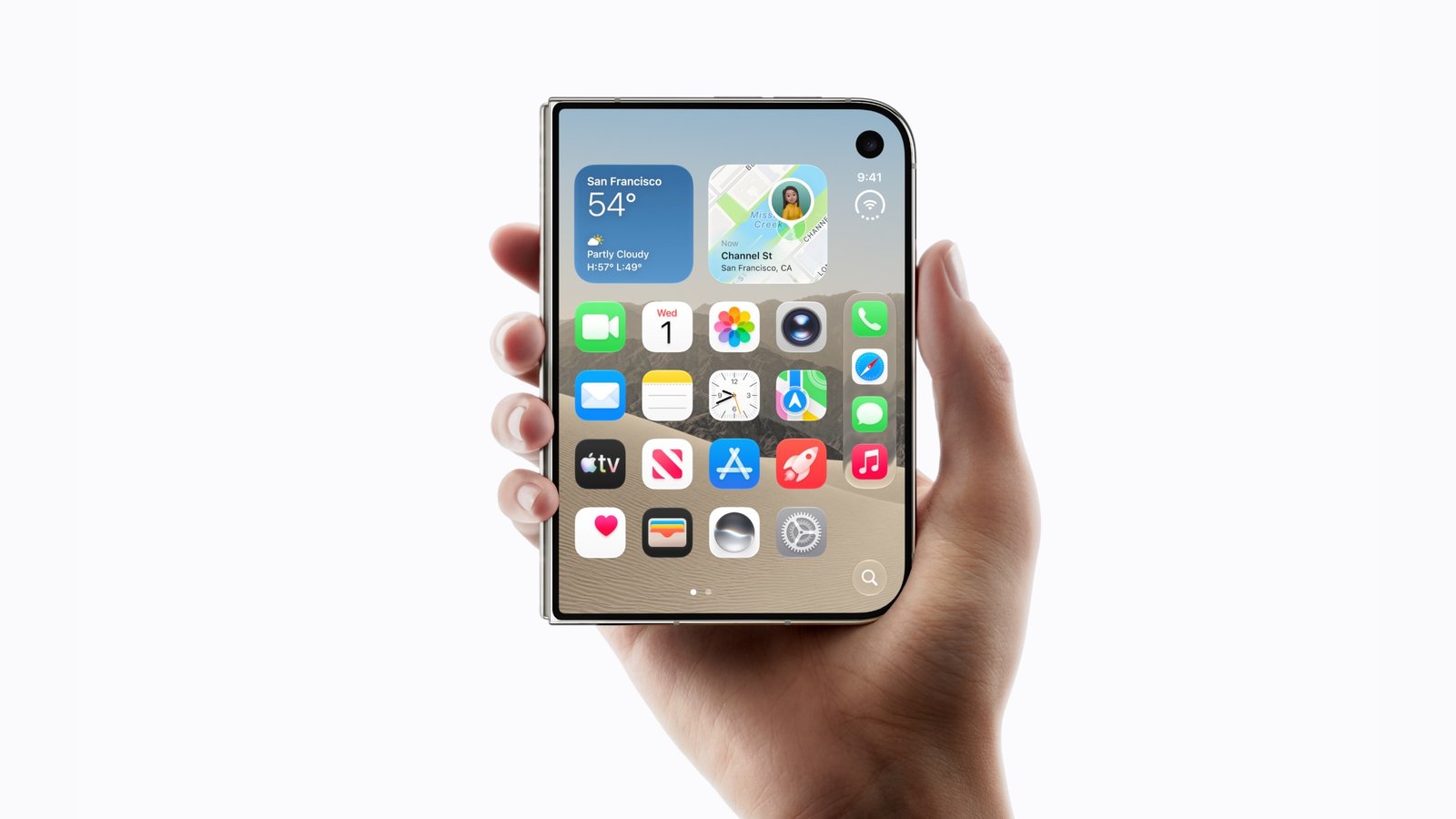
The Apple iPhone Duo, described as a foldable iPhone, represents the kind of product direction that could help renew interest in Apple's hardware strategy.
Foldable smartphones have already been introduced by competing manufacturers. Apple's opportunity, therefore, is not simply to be another company selling a foldable device. It is to make the format useful, reliable and intuitive enough that consumers see a genuine reason to choose it.
A well-executed foldable iPhone could combine the portability of a conventional smartphone with a larger screen for watching films, reading, gaming and multitasking. It could also create new possibilities for applications designed around different screen sizes.
However, the price will be a significant consideration. Premium foldable devices can be expensive, and customers will expect excellent durability, dependable software and a clear advantage over conventional smartphones.
If the iPhone Duo delivers those benefits, it could help Apple expand the meaning of the iPhone rather than merely add another model to its existing range.
Note: Product names, specifications and availability should be verified against Apple's official announcements before publication.
Apple HomeView: Extending the Apple Experience Into the Home
Another potential area of opportunity is the smart home.
A product referred to as Apple HomeView could represent a broader effort to make Apple's ecosystem more useful beyond phones, tablets and computers. A smart home hub could bring together connected lights, cameras, speakers, thermostats and other compatible devices through a central interface.
The appeal of such a product would depend on how easily it allows people to control their homes, communicate with family members and access useful information. Integration with Apple's wider ecosystem could make the experience more convenient for existing customers.
Artificial intelligence could add further value by helping users manage routines, control compatible devices and interact with their home systems more naturally.
However, smart home technology is already a competitive market. Apple would need to offer clear advantages in reliability, privacy, ease of setup and compatibility to convince customers to invest in another premium device.
The product name and launch details should be checked against official Apple sources before treating HomeView as a confirmed commercial product.
Premium Pricing: Is Apple Still Worth the Money?
Apple's products have never competed primarily on low prices. The company sells a combination of hardware, software, design, customer support and ecosystem integration.
For many consumers, the premium is justified by the experience. Devices work together, software updates are delivered over several years, and the transition between products can be relatively seamless.
But premium pricing also creates higher expectations. Customers are less likely to accept compromises when they pay significantly more than they would for competing products.
For a new device such as a foldable iPhone, Apple must demonstrate that the additional cost buys something genuinely useful. A premium price alone does not make a product better, and advanced specifications do not automatically translate into a superior everyday experience.
The strongest strategy would be to offer products that justify their prices through quality, reliability and features that customers use regularly.
Artificial Intelligence Could Define Apple's Next Era
Beyond new hardware, artificial intelligence may be one of the most important factors shaping Apple's future.
Consumers increasingly expect their devices to understand natural language, organise information, assist with everyday tasks and provide more personalised experiences. Apple's challenge is to bring these capabilities into its products while maintaining its emphasis on privacy and ease of use.
AI could become especially valuable when it works across the iPhone, Mac, iPad and smart home devices. Instead of requiring users to open separate applications for every task, a capable assistant could help connect information and actions across the ecosystem.
However, expectations are high, and competitors are moving quickly. Apple will need to show that its AI features are reliable, genuinely useful and available where customers need them.
In the long term, meaningful software innovation may prove just as important as a new device design.
Can John Ternus Make Apple's Future Brighter?
Apple has several advantages: a recognised global brand, a loyal customer base, an integrated ecosystem and substantial engineering resources. These strengths give the company opportunities to explore new products without abandoning its established business.
At the same time, the next stage will require more than maintaining existing success. Consumers need reasons to remain interested in Apple's products, particularly when replacement cycles are becoming longer and competing devices offer increasingly capable features.
The iPhone Duo and smart home ambitions illustrate the types of directions that could broaden Apple's product portfolio. Yet their success will depend on execution, pricing, software support and whether they solve real problems for consumers.
Ternus does not need to repeat Steve Jobs' approach exactly. Technology has moved forward, and the needs of modern users are different. What matters is preserving the willingness to challenge established product categories and create experiences that feel meaningfully better.
Final Thoughts
Apple's story demonstrates how quickly a company's future can change when leadership, technology and product vision come together. Steve Jobs helped turn Apple into a company that changed several industries. The responsibility now lies with John Ternus to determine what the next generation of Apple products will contribute.
The iPhone still matters, but its future may depend on more substantial changes than annual processor upgrades. Foldable devices, smart home technology and useful AI experiences could help Apple open new opportunities.
Whether these products become the next major chapter in Apple's history remains to be seen. The opportunity is clear: if Apple can combine ambitious ideas with dependable engineering and practical benefits, it can continue to influence the direction of consumer technology.
Ultimately, the future of Apple will not be decided by how expensive its products are or how impressive their specifications look on paper. It will be decided by whether people feel that Apple is once again giving them something they did not know they needed.