
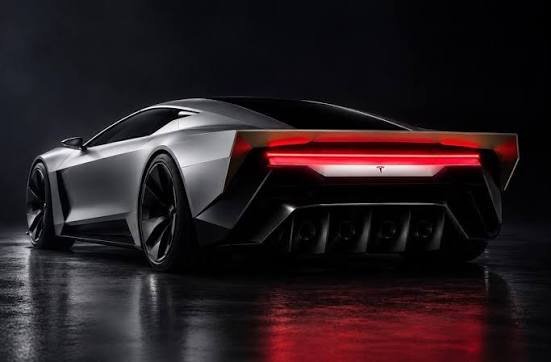
The future of electric cars could be far more exciting than simply improving battery range or making vehicles faster. With ambitious performance targets and the possibility of aerospace-inspired technology, the Tesla Roadster continues to attract attention from car enthusiasts, technology lovers and industry experts.
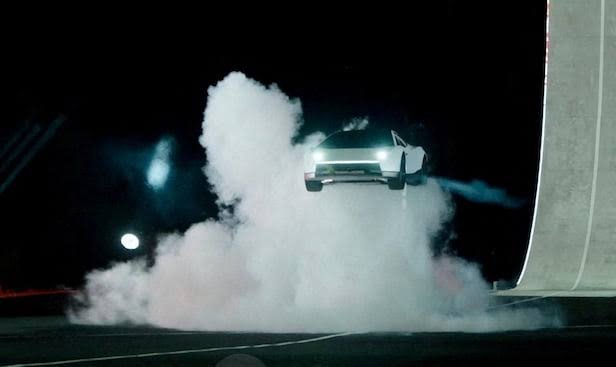
Tesla has previously promised extraordinary acceleration and high-speed performance for its next-generation Roadster. The idea of combining an electric supercar with SpaceX-inspired propulsion technology has also fuelled discussions about what the next era of automotive engineering might look like.
But how much of this vision is practical, and what could it mean for the future of the automotive industry?
Let's explore the technology, the performance expectations and the challenges that could determine whether the Tesla Roadster becomes a genuine engineering milestone or remains an ambitious vision.
1. Tesla Roadster: Exploring the Possibility of Rocket-Inspired Technology
One of the most talked-about ideas associated with the next-generation Tesla Roadster is a potential SpaceX-inspired package featuring compressed-gas thrusters.
Unlike conventional sports cars, which rely on electric motors, tyres and aerodynamic design to deliver performance, a rocket-inspired system could introduce a different approach to acceleration and vehicle control.
The concept involves using stored, high-pressure gas and specialised nozzles to produce short bursts of force. In theory, this could help the vehicle achieve additional acceleration or improve control under specific conditions.
However, it is important to separate the concept from confirmed production specifications. Detailed claims about a particular number of thrusters, active vacuum systems or demonstrated sub-one-second acceleration should not be treated as established facts without reliable supporting evidence from Tesla.
How could a cold-gas thruster system work?
A cold-gas thruster releases pressurised gas through a nozzle. As the gas moves in one direction, it generates thrust in the opposite direction.
In aerospace applications, this technology can help spacecraft adjust their orientation and position. Applying a similar principle to a road car would present a very different engineering challenge.
A proposed system would need to address several questions:
Acceleration: Could additional thrust improve launch performance beyond what conventional tyres can deliver?
Vehicle stability: How would the system control unwanted movement, particularly during acceleration, braking and cornering?
Weight management: Would the tanks, valves and associated equipment add too much weight?
Safety: How could high-pressure gas storage and discharge be made safe for the driver, passengers and people nearby?
These questions highlight why the Tesla Roadster concept is interesting. The challenge is not simply producing more power; it is making that power controllable, efficient and safe.
2. Tesla Roadster Performance: What Can Drivers Expect?
The Tesla Roadster has long been associated with ambitious performance promises. Its original successor concept was designed to push the boundaries of electric sports-car acceleration and top speed.
Tesla's previously announced targets included a 0–60 mph time of 1.9 seconds and a top speed above 250 mph. These figures were presented as targets rather than independently verified production-car performance.
A rocket-inspired package has also been discussed as a way to enhance the vehicle's acceleration potential. However, any more extreme performance figures should be treated as unverified unless demonstrated under transparent, independently documented testing conditions.
Tesla Roadster performance overview
FeatureDetailsVehicle typeAll-electric sports carAccelerationPreviously announced target of 0–60 mph in 1.9 secondsTop speedPreviously announced target above 250 mphPowertrainElectric powertrain; final production specifications require confirmationSpaceX-inspired technologyDiscussed as a potential performance-enhancing optionProduction timingSubject to official confirmation and changeThe key point is that the Tesla Roadster is being positioned as a high-performance electric vehicle, but its final specifications and real-world capabilities must be judged on the production model rather than on promotional claims alone.
For buyers, the most meaningful measures will be independently tested acceleration, braking performance, battery efficiency, handling and reliability.
3. Is the Tesla Roadster a Flying Car?
The phrase "flying car" naturally grabs attention, particularly when it is associated with a vehicle equipped with rocket-inspired technology.
However, a car that uses short bursts of thrust to lift or move itself briefly is not the same as an aircraft designed for sustained flight.
Traditional cars depend on their tyres to maintain contact with the road. Aircraft, meanwhile, rely on aerodynamic lift, rotors or other systems specifically designed to support flight.
A thruster-equipped vehicle would face a different set of challenges.
What would be required for genuine flight?
For a car to travel safely through the air, it would need a reliable way to generate and control sufficient lift, maintain stability and manage take-off and landing.
It would also require suitable flight-control systems, emergency procedures and compliance with aviation regulations.
A compressed-gas thruster could theoretically produce brief upward movement if sufficient thrust were available. However, that possibility alone does not establish that a vehicle can perform controlled, sustained flight.
Therefore, the Tesla Roadster should not be described as a fully functional flying car without clear evidence of such a capability.
The more useful question is whether aerospace-inspired engineering can improve the performance of a road-going electric vehicle without making it excessively expensive, heavy or difficult to operate.
4. Why the Tesla Roadster Matters to the Automotive Industry
Even if some of the boldest ideas never reach production, the Tesla Roadster represents a broader trend in automotive development: manufacturers are exploring technologies that combine electric propulsion, advanced materials, software and aerospace engineering.
A new approach to performance
Electric motors already deliver torque quickly, allowing high-performance electric vehicles to accelerate rapidly from a standstill.
As battery and motor technologies mature, manufacturers may increasingly compete on other factors, including thermal management, weight reduction, aerodynamic efficiency and intelligent vehicle control.
The next generation of performance cars could therefore be defined by how effectively these technologies work together rather than by motor power alone.
Aerospace and automotive engineering coming together
The automotive and aerospace industries face several similar engineering challenges, including reducing weight, improving energy efficiency and controlling complex systems.
Lightweight composite materials, sophisticated sensors, electronic controls and advanced manufacturing techniques can have applications across both industries.
However, transferring technology from spacecraft to passenger cars is not straightforward. A system designed for occasional use in space may not be suitable for a vehicle expected to operate reliably in rain, dust, traffic and everyday driving conditions.
Successful innovation requires more than an impressive demonstration. It must also deliver durability, affordability and practical benefits.
Technology demonstrators and the power of marketing
Ambitious vehicles can serve as technology demonstrators, giving manufacturers a way to test ideas and attract attention to their broader engineering capabilities.
The Tesla Roadster has the potential to play this role by generating interest in electric performance and encouraging discussion about what future vehicles might achieve.
At the same time, consumers should distinguish between a concept, a prototype, a promised specification and a commercially available vehicle.
That distinction matters because a dramatic presentation does not necessarily translate into a product that customers can buy and use on public roads.
5. The Major Challenges Facing Rocket-Inspired Electric Cars
Turning an ambitious performance concept into a practical vehicle involves considerable engineering work.
Safety and regulation
High-pressure gas storage, powerful propulsion systems and unusual vehicle movements would raise important safety questions.
Manufacturers would need to demonstrate that such systems can operate without creating unacceptable risks for occupants, pedestrians and other road users.
Approval for public-road use would depend on applicable vehicle safety standards and regulatory requirements. Any aviation capability would introduce additional legal and certification considerations.
Cost and everyday usability
Advanced propulsion equipment could increase manufacturing complexity and maintenance costs.
For a road car, engineers must also consider passenger space, luggage capacity, servicing requirements, energy consumption and the ability to drive comfortably in ordinary conditions.
A technology that works impressively during a controlled demonstration may not necessarily make sense for everyday use.
Energy efficiency and practicality
A high-performance system must balance power with the energy needed to operate it.
For electric vehicles, this means considering battery capacity, thermal management, charging time and driving range. Additional equipment must justify its weight, cost and energy demands through measurable benefits.
Ultimately, a successful Tesla Roadster would need to offer more than spectacular acceleration. It would need to deliver a convincing overall driving experience.
6. What Business Leaders and Automotive Investors Should Watch
The Tesla Roadster also offers several lessons for people following the future of mobility.
First, performance targets are not the same as proven results. Investors and industry observers should look for independently verified testing, final production specifications and evidence of commercial readiness.
Second, cross-industry innovation can create new opportunities. Technologies developed for aerospace, robotics and advanced computing may eventually find useful applications in automotive engineering.
Third, manufacturing remains the real test. Producing a working prototype is different from building thousands of vehicles consistently, safely and at a competitive cost.
Finally, customer value matters. Extraordinary performance can generate attention, but long-term success depends on reliability, quality, ownership costs and a product that meets customer expectations.
For businesses, the wider opportunity lies in understanding which emerging technologies can move beyond demonstration and deliver practical benefits at scale.
7. The Road Ahead for the Tesla Roadster
The next-generation Tesla Roadster remains an ambitious example of how electric-car engineering could evolve.
Its appeal lies in the possibility of combining rapid acceleration, advanced electric powertrains and aerospace-inspired ideas in a single vehicle. Whether the most dramatic concepts become commercially available features remains an open question.
The automotive industry has repeatedly shown that today's experimental technologies can influence tomorrow's mainstream products. Yet progress depends on careful engineering, extensive testing and a clear understanding of real-world requirements.
For now, the most sensible way to view the Tesla Roadster is as a high-performance electric-car project with ambitious goals, rather than as proof that rocket-powered road cars or flying vehicles are ready for everyday use.
In Final
The Tesla Roadster represents more than the promise of a fast electric sports car. It reflects the growing ambition to combine automotive engineering with ideas from aerospace, advanced materials and intelligent control systems.
Some of its most exciting possibilities may eventually become practical innovations, while others may remain experimental concepts.
What will ultimately matter is not how extraordinary a demonstration looks, but whether the technology can be made safe, reliable, affordable and useful.
If Tesla can turn its ambitious vision into a production vehicle that meets those expectations, the Roadster could become an important chapter in the continuing evolution of electric performance cars.
Until then, curiosity is justified, but verified results will be the real measure of success.